
Aunt Jackie is a free and paid newsletter. If you find yourself reading it regularly and you enjoy it and find it valuable, please consider becoming a paid subscriber. This gives you full access and it helps me make a living as an artist.
Hello Reader,
I interviewed Milwaukee-based artist Heidi Parkes this week and was touched by her honest and vulnerable answers. I shouldn’t have been surprised, though, because any interview or podcast I’ve ever heard with her has been delightful and real. She’s a gem and I’m so thrilled to share this interview with you.
JD: Describe your practice.
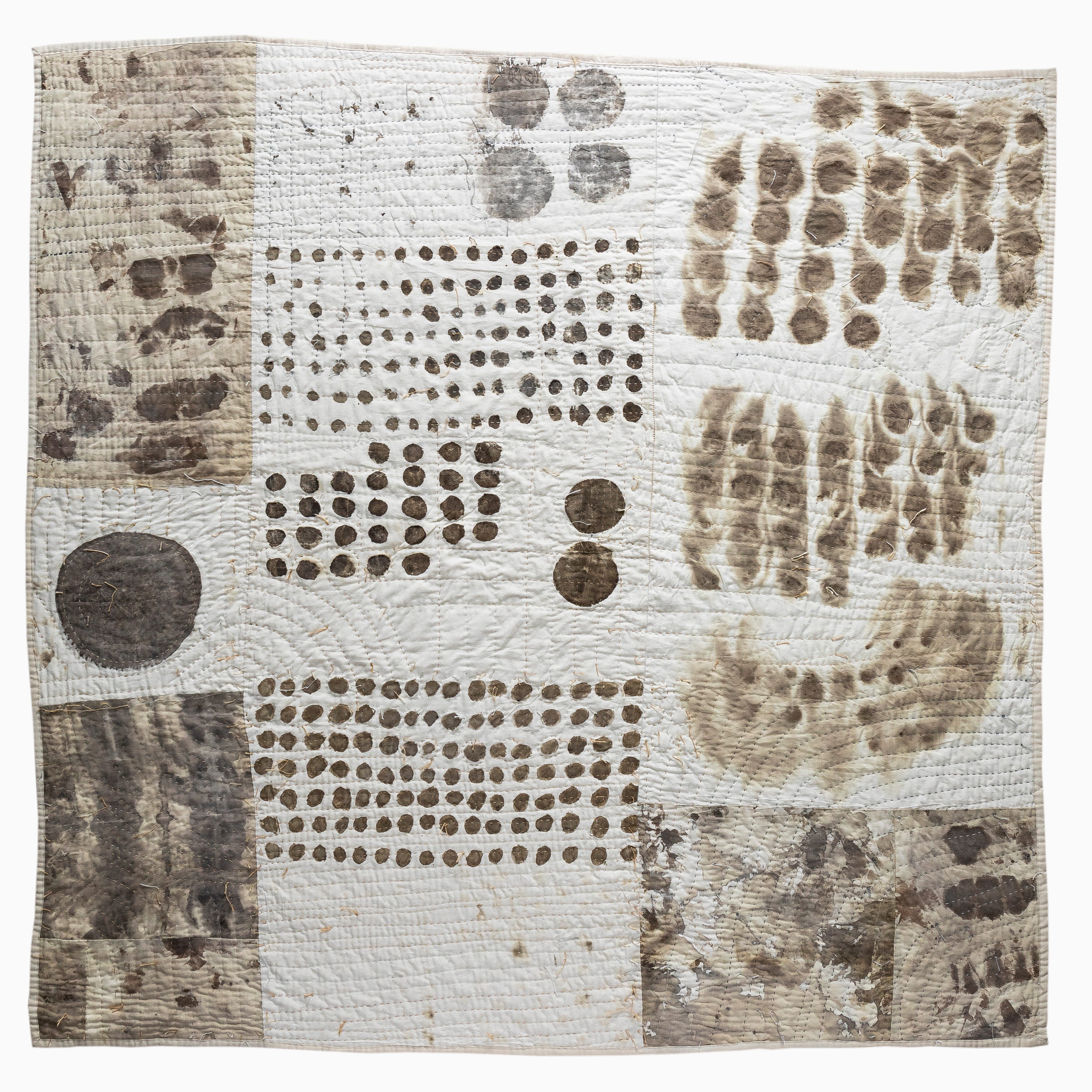
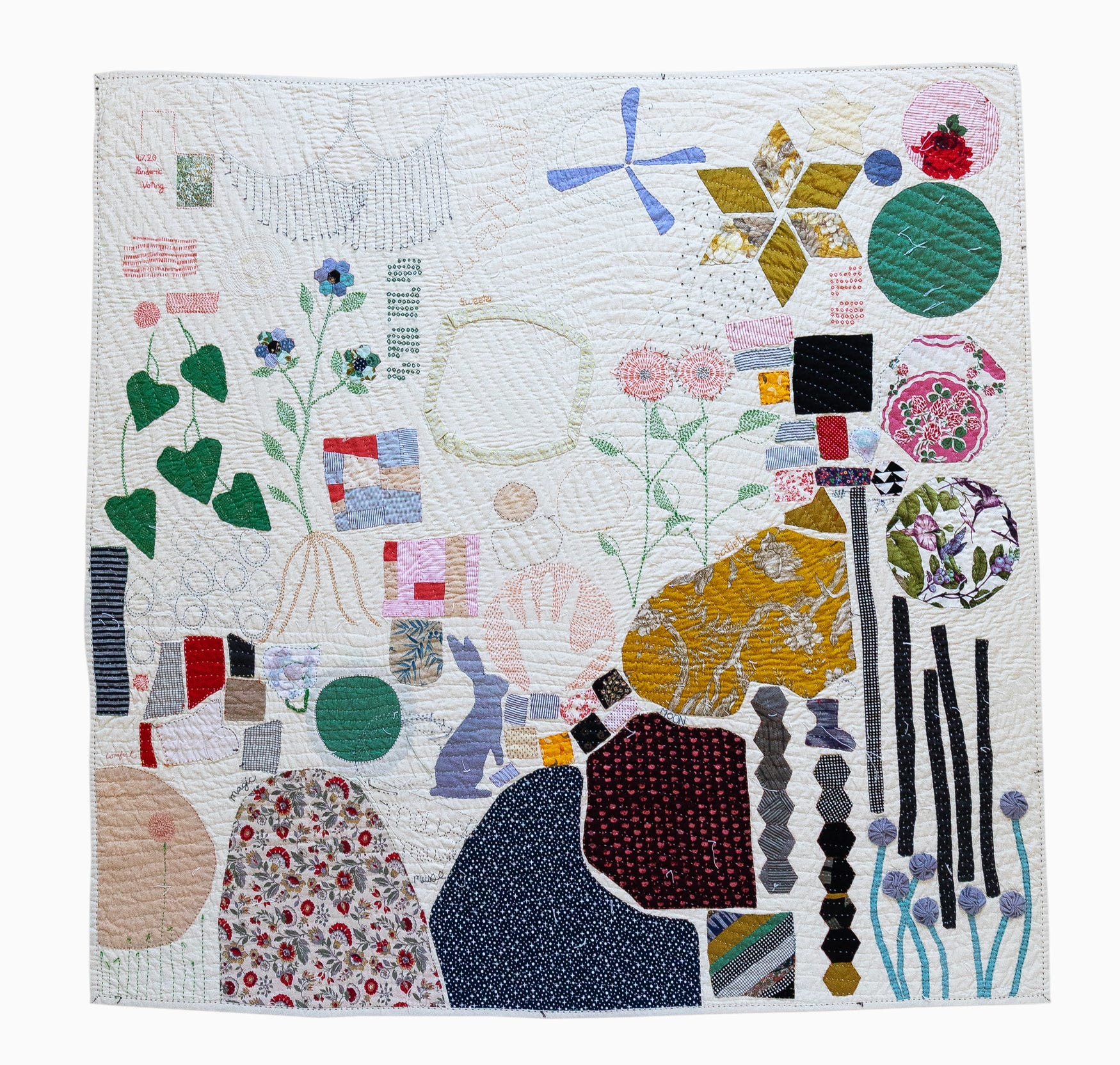
HP: I make quilts that function as abstract paintings, prioritizing hand-sewing techniques to explore the themes of diary, manifesting, everyday life, and cognitive reframing. My process begins with a question, and through the act of making, insights emerge. Improvisation and staying curious drive my work.
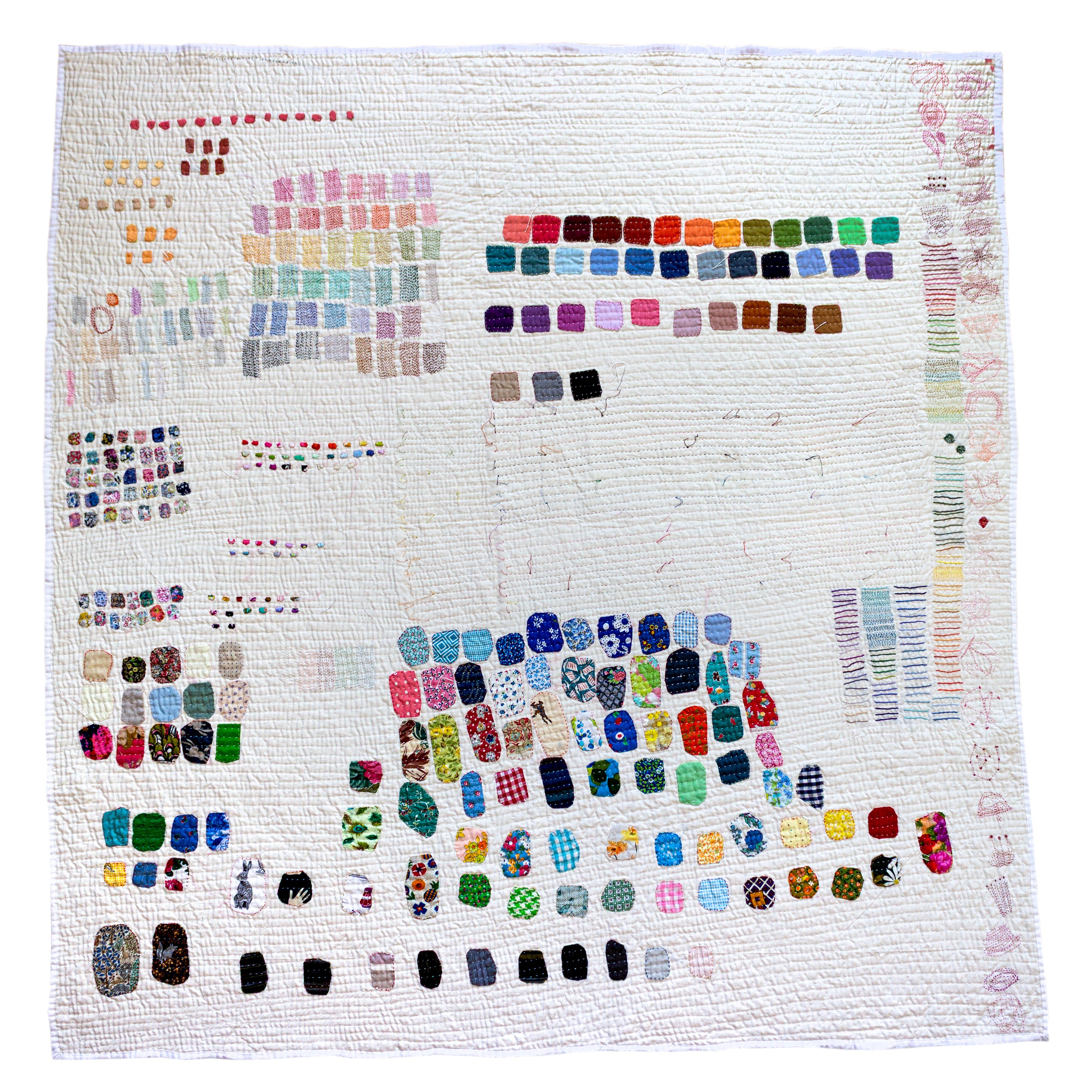
I build compositions over time, yielding to the circumstances of my daily life by sewing what I can while in meetings and on-the-go. This lighthearted approach admits to the ephemeral constraints of the everyday and yearns to create beauty with a process that mirrors and reveals the stresses of daily life.
Intermingling intuition and strategy, my diary quilts don’t tell a linear story, but instead are a tool for reframing the past, envisioning the future, and documenting daily minutiae. They are inner dialogue made visible.
Quilting is the microcosm in which I practice new ways of being—slowing down, cultivating new habits, reducing wastefulness—goals are set, and I stitch the things that I long for, want to be, and reminisce about. This strengthens my neural pathways for caring, noticing, and loving the hard-to-love.
Owning up to the truth of what I want, I study and explore concepts like the Law of Attraction, sympathetic magic, and magical thinking to cast spells into the future. Artifacts, silhouettes, text, calendars, and coded objects add potency to this magic.
I believe that a window into the hyper personal, and daring to dream big within a medium designed to express comfort and love, offers the viewer a space to similarly contemplate and imagine.
Commingling self-study and the cognitive sciences with magic and wish-granting invites curiosity and perhaps reminds us that there is power in softness, and that beauty can be created with the time and materials that we have access to.
JD: Are you a full time artist? How do you make ends meet (workshops, teaching, selling art, grants, etc.)
HP: Yes! I love being a full time artist. I create the largest part of my income through self-hosted teaching, meaning the classes that sell on my website and host live online or on-demand as passive income. I also teach through other spaces, mostly in-person.
I sell my art and am sometimes paid by museums for the loan of my art for their exhibitions, usually as an honorarium. I’ve been paid for artist residencies and have received occasional grant money. I also create income with affiliate links, royalties for filmed classes, and through YouTube—these payments are usually via direct deposit and are a fun surprise when I notice them in my bank account!
I intentionally try to create an arc of price points and accessibility in my art and teaching. There’s lots of free information on my website, Instagram, Pinterest, email newsletter, and YouTube—then, very affordable classes with Creativebug, followed by on-demand classes on my website for under $100. As students get more real-time with me & access to concepts that are unique to my teaching, the prices increase with the very high end being 2-week travel retreats for $8,000. Snuggled in the middle is the best value, with my annual online yearlong class at $3,000. This class truly invites students into my home studio, my mindset as an artist, and nurtures their own creative voice as we meet together on Zoom 3 times each month. My art ranges from $250 to $10,000, and I look carefully at my pricing so that each level and jump to the next level makes sense. It’s a mix of scale, technique, and “if this, then that.” These pricing arcs allow me to feel confident that if someone is eager to learn from me, they can—and simultaneously, I feel that my time and intellectual innovations are being valued.
JD: Right now, what is the hardest part about being an artist? What are the barriers to creating and/or making a living?
HP: I spend a lot more time being a savvy businesswoman at a computer than I spend actually making art. In part, it’s good that I don’t actually sew as much as I want to, because I think it would be very taxing on my body, but I do wish that I had a bit more sewing time than I do now. I delegate what I can to consultants who help me with website updates, photography, video, and some social media updates, but many things are just too complex and unique-to-me to delegate.
It’s important to look at these tasks carefully, because oftentimes removing something from my to-do list is just as good as actually doing it!
I try to remember that just because I’ve done it for a few years in a row, doesn’t mean it’s good to do it again this year. One of the biggest challenges to this business woman/art making balance is that I truly believe I could biz-work half as much and then make about a fourth of the money that I make. The free content is a gateway to the affordable content, which is a gateway to the things that really help me to make a sustainable living. I know that if I was my customer, I would want the “free sample” before signing up for something bigger, but that also means that I average more than 40-hours a week working.
(Sometimes I use an activity tracker on my phone just to touch base with the reality of this balance, because my mind can also play tricks on me. I’ll feel so strongly that I didn’t get to spend enough time sewing, but then I step back and look at the quantity of art that I made in the last year, and I realize that I must have actually spent many hundreds of hours sewing. In the blissful flow-state of making, time just moves differently from the moments when I’m at the computer.)
JD: What is the best part about being an artist, or what do you love about creating, or why do you create?
HP: I’ve always loved art, and loved experiencing art. Going with my mom and grandma to The Art Institute of Chicago, starting around age 5, was a truly favorite activity for me. Being an artist, it is so exciting to contribute to that ecosystem, and to create in others that feeling that I get when I see art that I love. This part, the connection with others, is about equal in enjoyment as the feeling of making, alone in my home studio.
One of the compliments that I receive often, that touches my heart so deeply, is that I’m a good teacher. It thrills me to see my students trusting their own creativity, innovating, and making beautiful and interesting art in connection with my classes. This impact on our culture feels profound to me, and makes me feel incredibly happy.
These loves of exhibiting, teaching, and creating all make that time taking pictures, writing, applying, shipping, filling out contracts, assembling powerpoints, etcetera, feel essential, and like they’re part of the art too.
JD: How does not having children influence your art practice?
HP: I really wanted to be a parent. At The School of The Art Institute of Chicago, I studied art education and became a high school art teacher because I thought that would be a wonderful starting point for a career and a great way to be a working parent. However, I invested a decade in a relationship with the wrong man, and at the age of 30 I was single, with a lot of healing to do, and I felt that I was a very long ways away from finding a partner with whom I could create the family that I’d dreamed of. I also felt so utterly powerless to create that future, since it hinged on finding a partner.
With the help of my therapist, and considering things that I could control, I realized in 2014 that I could leave my job of 9 years as an art teacher, and I could pursue a career as an artist. Without my success hinging on a teammate, it was amazing. I felt like a magician. I could decide that I wanted to make a change, make a quilt, apply to be in a show, start a social media presence, write about my art, build a website, and then: all those things got done!
Ultimately, not having children feels like the reason for my professional practice. It helped to fill and heal so many parts of me, and my commitment to being a full-time artist gave me something to work towards that was attainable.
Even now in 2026, much of my practice centers around healing, self-actualization, diary, and working with the limited resources and time that I have access to—to make something beautiful and interesting.
I picture other lives that I could have lived: as a teacher, a stay at home mom, a yoga instructor, and they would have all been really special and fulfilling. This particular path that I’ve followed to be an artist and independent teacher has been full of surprises. I’ve been lucky to find deep fulfillment in being an aunt for my two nephews, and I found my partner Beau in 2019.
To my surprise, I think that I actually love not being a mom.
I’m not a morning person, very sensitive to body-stuff, a bit disorganized at tidying up after myself—much less other humans, and I feel a nice kind of freedom as a person whose only dependents are a couple of house plants. Growing up, I was always very close with my Aunt Becky, who also never had kids, and she’s been a great model for me in enjoying the fun aspects of this life.
JD: How does your age/aging influence your art practice?
HP: At 43 years old, I’ve been thinking about my will lately, and the idea that when I pass on, I’d like my money to go towards the care and safe-placement of my unsold art. Lol, willing my things to my things!
But truly, my art does feel like it has that place in my life that a descendant would’ve had.
I also think a lot about healthy aging, and how I can care for myself as long and as well as I can. This influences my practice because a lot of the time that I used to spend sewing, has instead been invested in exercise over the last 2 years. I practice yoga with a focus on strength training for about 25-hours a month, and while I am a 500-hour certified yoga instructor and yoga therapist, I like attending classes—I teach so much sewing for my job, that it feels luxurious to be the student in yoga class.
In addition to muscle and exercise being important to avoid dementia and other physical age related problems, I also see it as essential to supporting my quilting practice. I’ve been to occupational and physical therapy a few times from 2017-2024, and every time I go, no matter what body part or problem, it feels to me like the solution is always that I need to get stronger. Arm, hand, elbow, and shoulder problems have all caused problems for my artistic practice in the past, and so now I’m trying to be very proactive about building strength and the other body care practices that I highlight in my Hand Yoga videos on my YouTube channel.
Being older as an artist has allowed me to be more established in my career, and has allowed me to devote this time to body care instead of to work. The way I see it, I can spend this time caring for my body now, or even more time could get shaved off of the end of my health-span, which would really cut into the amount of art I’ll get to make in this one precious life.
JD: Do you have advice for other women artists?
HP: Dream big, and ask for permission only on rare and carefully considered occasions.
JD: Share some of your favourite women artists.
HP: I’m a giant fan of Georgia O’Keeffe. I’ve loved listening to the biographies about her, and the length of her career, and the way that her art and sense of style evolved over the years is very inspiring to me.
I also love the work of Julie Mehretu, Sally Mann, Ghada Amer, Yoko Ono, Mary Jane Hannaford, Judith Scott, Yvonne Wells, Harriet Powers, Loretta Pettway and the Quilters of Gee’s Bend, Ernestine Zaumseil, Frankenthaler, Frida Kahlo, Deb Sokolow, Diana Guerrero-Maciá, Anne Wilson, Melissa Leandro, Amanda Nadig, Maura Ambrose, Nirmal Raja, Sarah Nishiura, Adriana Torres, Hikaru Noguchi, Celia Pym, Judith Martin, Ann Hamilton, Meredith Monk, and Andrea Zittel.
JD: Inspiring or useful books or videos you’ve read/watched about art, art making, artists, etc.
HP:
Hold Still: A Memoir with Photographs by Sally Mann
Art Work: On the Creative Life by Sally Mann
Art/Work, Everything You Need to Know (and Do) As You Pursue Your Art Career By Heather Darcy Bhandari and Jonathan Melber
Joyful: The Surprising Power of Ordinary Things to Create Extraordinary Happiness by Ingrid Fetell Lee
Walk Through Walls: A Memoir by Marina Abramovic
All That She Carried: The Journey of Ashley’s Sack, a Black Family Keepsake by Tiya Miles
Joy at Work: Organizing Your Professional Life by Marie Kondo
The Highly Sensitive Person by Elaine N. Aron
Threads of Life: A History of the World Through the Eye of a Needle by Clare Hunter
Big Magic: Creative Living Beyond Fear by Elizabeth Gilbert
Daring Greatly: How the Courage to Be Vulnerable Transforms the Way We Live, Love, Parent, and Lead by Brené Brown
Upcoming
From April 7 - 26, 2026 I will be part of this Victoria Arts Council group exhibition in Victoria, B.C.
On April 18, 2026 I will be participating in a CAPIC photography panel about making personal work at Gallery 881. The talk starts at 2pm.
From May 8 - June 14, 2026 I will have a solo exhibition at the Sunshine Coast Arts Council in Sechelt, B.C.
Postcard Club
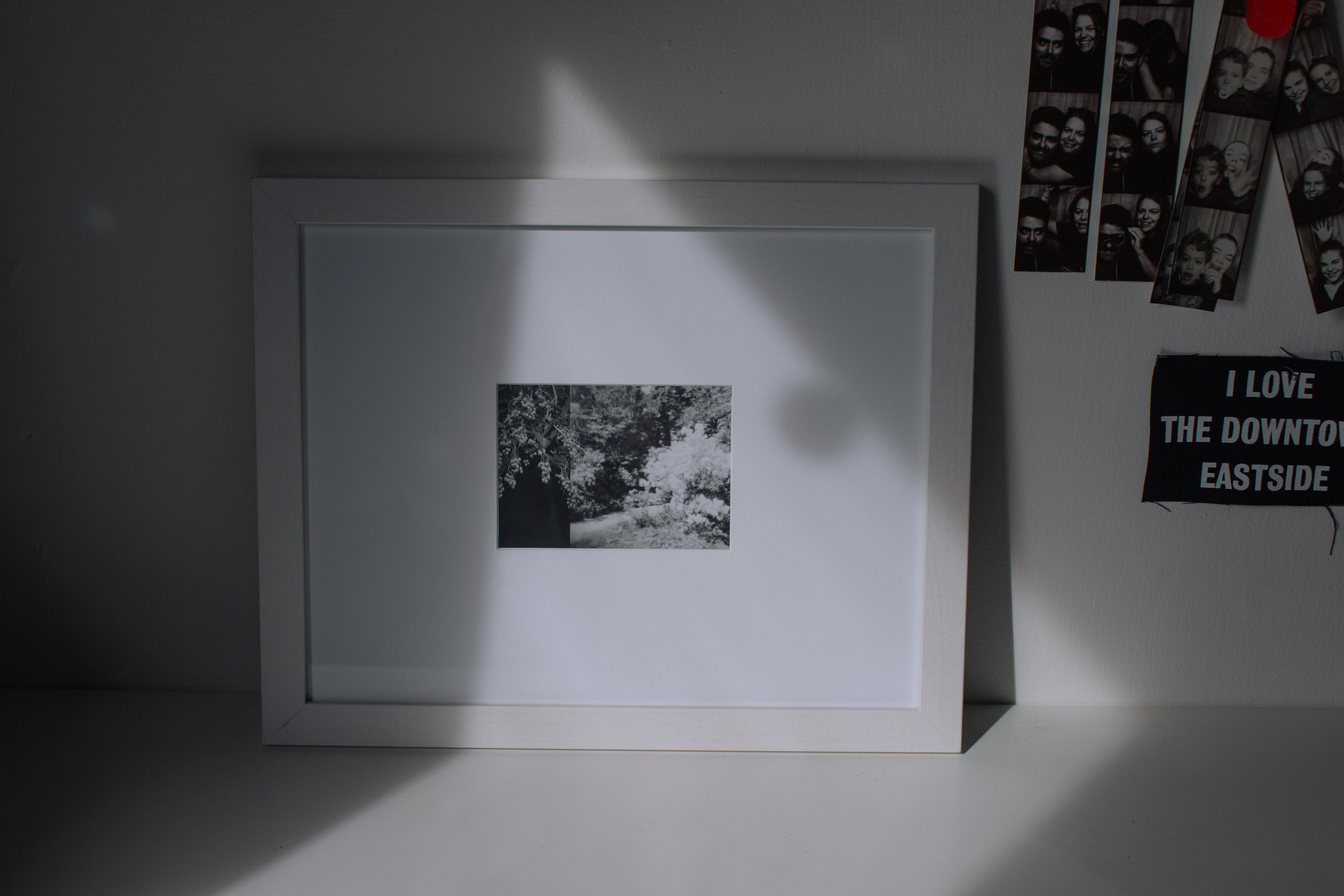
Postcard Club is a monthly mail club where I send one of my photographs as a postcard with a short write up on the back, usually about the process of making the photograph. There’s still time to sign up to receive April.
Thank you so much for this conversation & opportunity to reflect. ❤️
What a great interview!!